Local SEO for Home Service Businesses in Tampa Bay

Page two of Google is where HVAC websites go to be technically present and commercially invisible. Most Tampa companies stuck there share the same frustration: the site exists, the work is good, and the rankings will not move.
They also share the same causes. Here are the five levers that actually move an HVAC site's rankings, in the order they usually matter.
Key Takeaways
Sites get stuck for three reasons: the page does not match the search, the site has not earned trust, or the experience is slow.
One dedicated page per search beats one homepage stretched across twenty searches, every time.
Internal links are the ranking lever most owners have never touched.
Structured data now feeds two rankers at once: Google and the AI answer layer.
Why Sites Get Stuck
Google's own explanation of how Search works comes down to matching and trust: does this page clearly answer this search, and does the web's evidence say this business is real and reliable?
Stuck sites fail one or both. The homepage tries to answer every search at once, so it matches none sharply. Or the site is thin and stale, so trust never accumulates. Speed problems then tax whatever is left. The levers below attack those causes in order.
Lever 1: Build the Page the Search Deserves
"AC replacement Wesley Chapel" wants a page about AC replacement in Wesley Chapel. Not your homepage, not a services list, a page.
This is the highest-impact ranking work on almost every stuck HVAC site: dedicated pages for each money service and each city, written specifically, one search per door. Rankings follow relevance, and relevance is built one page at a time.
Lever 2: Say It Where Google Looks
Each page has a handful of high-attention spots: the title tag, the H1, the headings, the first hundred words. The target search belongs in them, said naturally.
This is thirty minutes per page and the most common quick win we find. A strong page that never names its own search in the title is a runner who forgot to register for the race.
Lever 3: Link Your Own Pages Like You Mean It
Google discovers and weighs your pages partly through how you link them to each other. Most HVAC sites either do not interlink at all or bury everything in a footer menu.
Do it deliberately: service pages link to related services in the body text, city pages link to the services offered there, and blog posts link up to the pages that book jobs. Descriptive anchors, real sentences. It is free authority routing, and almost no Tampa competitor does it.
Lever 4: Speed and Stability
Slow pages rank worse and convert worse, a double tax. The bar is main content visible in about 2.5 seconds on a phone, per Google's page speed standards.
Compress the images, drop the bloat, fix the hosting. Speed will not carry a weak page upward, but it quietly drags strong pages down.
Lever 5: Structured Data, Fuel for Two Rankers
Structured data marks up your pages in machine language: this is the business, these are the services, this is the area. Google uses it to understand and display your pages. The AI answer layer leans on it even harder when deciding which company to name.
One implementation, two surfaces. In our Appear Everywhere Framework this lever earns its place because it feeds the newest surface at the same time as the oldest one.
What Moves First
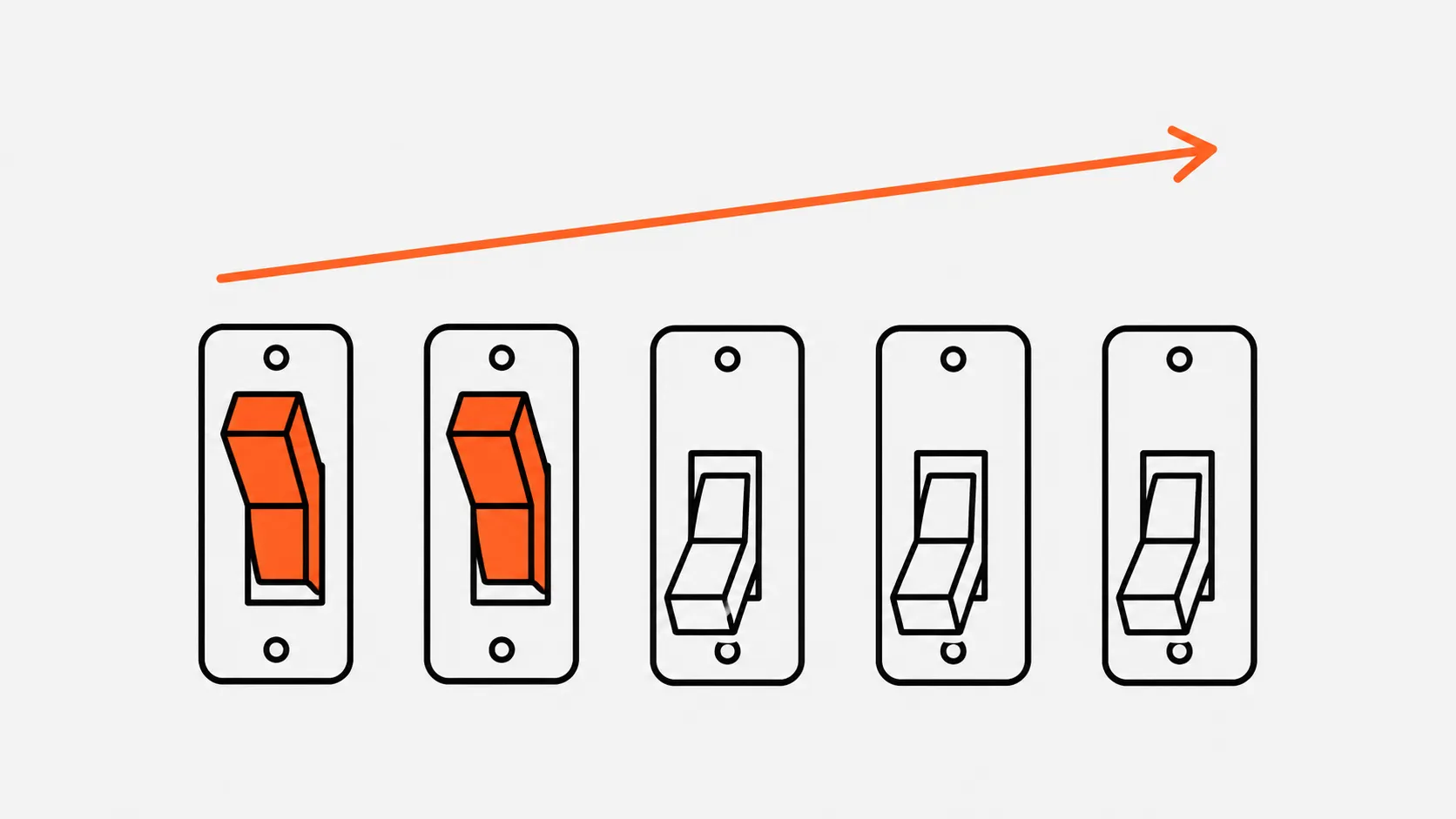
Most advice says "publish more and wait." Order beats volume. Titles and on-page fixes often show movement in weeks. New dedicated pages take a season to index, climb, and settle. Internal linking accelerates both. Speed and structured data pay continuously in the background.
That sequencing is not theory. The client heatmap we cite most, outside the top 20 to top 3 in the core service area in two months, started with exactly this order: pages and on-page signals first, everything else stacked behind. That is the daily work inside our done-for-you Tampa HVAC rankings program, alongside what full website SEO services cover. And once rankings move, make sure the traffic converts: fix the seven conversion leaks before the visitors arrive.
How We Work
We are a veteran-owned SEO agency, and we work with one contractor per trade, per city. When an HVAC company claims their city with us, HVAC closes to their competitors there.
We back the work with a 90-day conditional guarantee. We define measurable progress upfront. If we do not deliver it, we keep working at no charge until we do. No ranking promises, because no one controls Google. Accountable, measurable progress instead.
Frequently Asked Questions
How do I improve my HVAC website's Google ranking?
Work the five levers in order: build a dedicated page for each money search, place the search terms in titles and headings, interlink your pages with descriptive anchors, hit the 2.5-second speed bar, and add structured data. Pages first; everything else amplifies them.
Why is my HVAC website not ranking?
Usually one of three causes: no dedicated page matches the search, the site is too thin or inconsistent to have earned trust, or slow pages are taxing everything. Diagnose in that order before spending on anything.
How long does it take to improve HVAC website rankings?
On-page fixes can move positions within weeks. New service and city pages typically need a season to climb and settle. Watch movement monthly on a ranking grid rather than judging by a single keyword.
Do blog posts help an HVAC website rank?
Yes, when they answer real homeowner questions and link up to your service pages. Posts build the topical depth and internal links that lift the pages that book jobs. Random posts without links help almost nothing.
Five Levers, Pulled in Order
Match the search, say it where Google looks, link like you mean it, load fast, and speak machine. Page two is not a life sentence; it is a to-do list.
Want to know which lever your site is stuck on? Book a Free Local Lead Growth Session and we will find it on the live grid together.
